Introduction
In medical logistics, a delayed or mishandled shipment isn't just a business problem—it can directly affect patient outcomes and trigger serious regulatory consequences. A pharmaceutical shipment stuck at 10°C instead of 5°C for two hours may be rendered unsafe. Customs rejection from a mislabeled medical device can delay critical care by days.
That margin for error — essentially zero — is what makes medical logistics its own discipline. This guide breaks down what it means, the compliance requirements involved, the common pitfalls, and what to look for in a logistics partner. It's written for medical device manufacturers, online medical supply sellers, Amazon FBA medical product businesses, and companies shipping products overseas.
TLDR
- Medical logistics manages pharmaceuticals, medical devices, and supplies from manufacturer to end user with strict regulatory oversight
- Specialized storage, packaging, transportation, and compliance requirements set it apart from standard freight
- Key challenges: temperature control, expiration management, hazardous material handling, and real-time tracking
- Major compliance frameworks: FDA, GMP, ISO, and GDP—non-compliance halts shipments or triggers penalties
- Choose partners with certifications, compliance expertise, and customized handling—not just the lowest rate
What Is Medical Logistics?
Medical logistics covers how medical products—pharmaceuticals, devices, surgical supplies, and related goods—move from manufacturer to point of use. Unlike standard freight, it prioritizes effectiveness over pure efficiency, because the end users are healthcare providers and patients.
Medical logistics sits within the broader healthcare supply chain: manufacturers produce, distributors manage inventory, and logistics partners handle movement and compliance at every handoff. Medical supplies are the second-largest cost in healthcare after staff—hospital labor reached $839 billion in 2024, while medical supply expenses hit $146.9 billion (10.5% of the average hospital budget). That scale makes getting the logistics right both a financial and clinical necessity.
Medical logistics differs fundamentally from regular freight logistics in four ways:
- Regulatory oversight - FDA, GDP, and ISO standards govern every step
- Product sensitivity - Temperature, sterility, and hazmat requirements demand specialized handling
- Zero-tolerance for delays - Late shipments compromise patient care
- Traceability requirements - Every shipment needs full chain-of-custody documentation
Medical Supply Logistics
Medical supply logistics focuses on consumable, high-volume products: pharmaceuticals, vaccines, IV fluids, PPE, test kits, and syringes. These items often have expiration dates, require cold chain handling, and must be tracked for batch recall purposes.
Key operational priorities include:
- Restock quickly — high turnover leaves little buffer before shortages affect care
- Rotate by expiration date (FEFO) to minimize waste and avoid shipping near-expired product
- Track lot numbers end-to-end so recalls can be executed without guesswork
- Maintain strict temperature ranges throughout storage and transit
Medical Equipment Logistics
Medical equipment logistics focuses on large, high-value, durable assets: MRI machines, ventilators, hospital beds, and surgical instruments. These items require specialized packaging, crating, shock-absorbent materials, and often white-glove delivery that includes installation inside the facility.
Key operational priorities include:
- Account for hazmat regulations when equipment contains batteries or embedded chemicals
- Maintain full chain-of-custody documentation given the high asset value
- Carry adequate insurance coverage — a damaged MRI machine is not a minor claim
Key Challenges in Medical Logistics
Medical logistics is unforgiving. A single gap in handling, storage, or documentation can compromise product integrity, trigger regulatory action, or put patients at risk.
Temperature and Environmental Control
The cold chain challenge is critical: many biologics, vaccines, and specialty medications require precise temperature ranges from storage through final delivery. Cold chain medicines now account for 32% of global pharmaceutical value ($384 billion) and are growing at 13% annually—more than quadruple the 3% growth rate of ambient drugs.
Even brief temperature excursions can render product unsafe. The pharmaceutical industry loses an estimated $35 billion annually due to preventable cold chain failures. A 1-2°C deviation can degrade sensitive biologics, vaccines, or insulin.
Standard temperature tiers:
- Controlled Room Temperature (CRT): 20°C to 25°C (excursions between 15°C and 30°C allowed)
- Refrigerated (Cold Chain): 2°C to 8°C (for biologics, insulin, vaccines)
- Frozen: -25°C to -10°C (some products require below -20°C)
- Ultra-Low: -70°C or below (mRNA vaccines, cell therapies, clinical trial samples)
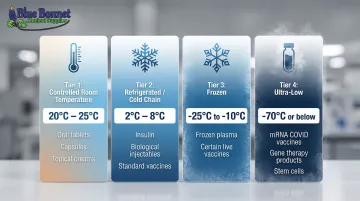
Required infrastructure includes insulated passive containers, active temperature-controlled containers, refrigerated transport vehicles (reefers), and temperature-controlled warehouse environments.
Expiration and Inventory Management
Poor inventory management leads to significant expiration waste. Hospital supply chain audits routinely identify an average of $90,000 worth of expired supplies per healthcare organization—and over $1 million in large acute care systems.
FEFO (first expired, first out) and FIFO (first in, first out) are standard practices that reduce both waste and patient safety risk. The EU Good Distribution Practice (GDP) guidelines mandate FEFO-based stock rotation, with documented exceptions required for any deviations. Without systematic tracking, high-volume operations are highly prone to expiry losses.
Hazardous Materials Handling
Many medical devices and supplies contain chemicals, radioactive materials, or other hazardous components requiring DOT-compliant containers and trained handling personnel. Misclassification or improper packaging can result in shipment rejection, fines, or safety incidents.
Common medical hazmat categories:
- Biological Substances (UN3373, Category B): Primary receptacle, leakproof secondary packaging, and rigid outer packaging required
- Infectious Substances (UN2814/UN2900, Category A): Highly specialized packaging required due to life-threatening exposure risks
- Dry Ice (UN1845): Packaging must allow carbon dioxide gas release to prevent pressure build-up
- Lithium Batteries (UN3480/UN3090): Common in medical devices and temperature data loggers; strict air transport rules apply
PHMSA actively enforces these regulations with civil penalties ranging from $2,400 to $13,500 for violations.
Packaging and Product Integrity
Medical products require tamper-evident seals, sterile packaging protocols, and shock-absorbent materials for fragile devices. Improper packaging leads to product damage, contamination, or failed quality checks upon arrival—any of which can delay care, trigger recalls, or result in costly returns.
Real-Time Tracking and Visibility
Standard shipment tracking is insufficient for medical logistics. Real-time GPS location data and condition monitoring (temperature, humidity, shock) throughout the journey—not just at origin and destination—are essential. Without that continuous visibility, a temperature excursion or routing delay may not surface until the product is already compromised.
Regulatory Compliance in Medical Logistics
Regulatory compliance is the most complex dimension of medical logistics. Multiple overlapping frameworks apply, and non-compliance can get shipments seized, trigger product recalls, and expose businesses to legal liability.
FDA Requirements
The FDA regulates the handling, storage, and distribution of drugs and medical devices in the US. Businesses that store or ship FDA-regulated products must follow current Good Distribution Practice (GDP) and Good Manufacturing Practice (GMP) standards. FDA-cleared packaging is a specific certification that matters for any business shipping packaged medical products.
ISO Standards
ISO 13485 covers quality management systems for medical devices, while ISO 9001 applies more broadly. Logistics partners holding ISO certification give clients higher assurance of documented, auditable processes.
One detail worth knowing: ISO 13485:2016 mandates that manufacturers retain ultimate responsibility for outsourced processes and must govern 3PLs through written quality agreements.
Documentation and Traceability
Every shipment must carry complete documentation throughout its journey. For domestic and international moves, that typically includes:
- Chain-of-custody records and handling documentation
- Batch numbers and lot numbers for full traceability
- Temperature logs for cold-chain or sensitive products
- Proper customs paperwork with accurate product classification
Missing or incorrect documentation is one of the most common reasons medical shipments get held at the border.
Under the Drug Supply Chain Security Act (DSCSA), 3PLs and wholesale distributors must hold valid licenses and report annually to the FDA. The FDA and U.S. Customs and Border Protection have authority to detain or refuse admission to medical shipments lacking proper compliance documentation.
Medical Warehousing: The Foundation of a Reliable Supply Chain
Medical warehousing is specialized storage designed and certified for medical products. It differs from standard warehousing in critical ways: medical facilities require environmental controls (temperature zones, humidity management), cleanroom protocols, restricted access areas, surveillance, and compliance documentation—none of which standard warehouses offer.
A qualified medical warehouse needs to deliver on several fronts:
- Inventory tracking: WMS with lot tracking, expiration date alerts, FIFO/FEFO enforcement, and real-time stock visibility for audits, recalls, and replenishment
- FDA-cleared packaging: Compliant packaging materials and formats for FDA-regulated goods — required for any outsourced fulfillment operation
- Environmental controls: Temperature zones, humidity management, and cleanroom protocols maintained consistently
- Access and security: Restricted zones, surveillance, and documented chain of custody
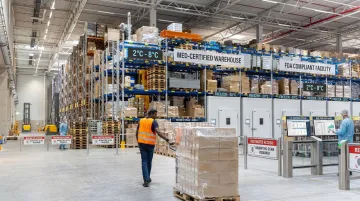
Bluebonnet Medical Supplies holds FDA-cleared packaging certifications along with ISO and GMP compliance, making it a qualified partner for businesses that need fully compliant storage and fulfillment without building their own regulated facility. Their Cedar Park, TX warehouse is built to handle sensitive medical items with proper storage, inventory tracking, and regulatory compliance integrated into daily operations.
That level of infrastructure reflects broader industry momentum. The healthcare 3PL market was valued at $261.39 billion in 2024 and is projected to reach $406.36 billion by 2030, growing at 7.75% annually—driven by the expansion of biologics and tightening regulatory requirements for temperature-controlled transport.
How to Choose the Right Medical Logistics Partner
The wrong logistics partner can stall shipments, create compliance gaps, and erode your margins. Here's what to evaluate before signing on.
Certifications and Compliance Expertise
Any partner handling regulated medical products should hold relevant credentials—FDA registration, GMP compliance, ISO certification, and HIPAA-safe handling protocols. Ask prospective partners to demonstrate documented processes, not just claim compliance.
Look for:
- FDA registration and annual reporting compliance
- ISO 13485 certification for medical device quality management
- GMP compliance for pharmaceutical handling
- HIPAA-safe handling protocols for protected health information
- IATA CEIV Pharma certification for air freight operations
Request copies of quality manuals, audit reports, and certification numbers. Use evaluation frameworks like the Health Industry Distributors Association (HIDA) Supplier Checklist to verify compliance systematically.
Customized Solutions Over Cookie-Cutter Systems
Medical businesses vary widely in product type, volume, and distribution channel (e-commerce, Amazon, B2B, international). A logistics partner that forces every client into the same workflow will create friction.
Look for providers that tailor storage, packing, and shipping processes to how your business actually operates—including support for international shipments and returns processing. Bluebonnet Medical Supplies works this way: each client gets a tailored plan built around their specific products and operations, not a template dropped on top of them.
Cost Transparency and Shipping Relationships
The right partner will have direct carrier relationships that translate into discounted shipping rates—and will be upfront about how costs are structured before you commit.
Hidden fees to watch for:
- Accessorial charges that add 15–50% on top of base freight rates
- Liftgate and limited access fees when delivery locations lack loading docks
- Freight reclassification fees triggered by incorrect density or dimension declarations
- Storage minimums and inventory turn penalties buried in the contract
Under federal law (49 U.S.C. 13708), motor carriers must disclose actual rates and charges on freight billing documents. Negotiate custom, capped accessorial pricing during the RFP process—don't default to whatever the carrier's standard tariff lists.
Frequently Asked Questions
What is the meaning of medical logistics?
Medical logistics is the specialized management of pharmaceuticals, medical devices, and healthcare supplies through storage, handling, and transportation—with emphasis on regulatory compliance and product integrity at every stage.
What does a medical logistician do?
A medical logistician manages the movement of medical products through the supply chain—from procurement and storage to final delivery. Their core responsibilities include maintaining regulatory compliance, inventory accuracy, and uninterrupted supply to healthcare providers.
What is the difference between medical supply and medical equipment logistics?
Medical supply logistics handles consumables like pharmaceuticals and PPE, which require high-volume, fast-moving, and often cold chain management. Medical equipment logistics covers durable assets such as imaging machines and surgical tools, which need specialized packaging, secure transport, and often white-glove installation.
What regulations apply to medical logistics?
Core frameworks include FDA regulations, Good Distribution Practice (GDP), GMP, and ISO 13485, plus country-specific import/export rules for international shipments. For prescription drugs specifically, the Drug Supply Chain Security Act (DSCSA) governs end-to-end traceability.
What is cold chain logistics in healthcare?
Cold chain logistics is the unbroken sequence of temperature-controlled storage and transportation required for temperature-sensitive products like vaccines and biologics. It maintains precise temperature ranges from warehouse to final delivery without interruption.
How is medical logistics different from regular freight shipping?
Unlike standard freight, medical logistics requires regulatory compliance (FDA, GDP, ISO), strict temperature and sterility standards, and documented chain-of-custody at every handoff. The difference comes down to stakes—delays or mishandling in medical shipping can have life-critical consequences.