Introduction
Over 200,000 Indian sellers have collectively exported more than $20 billion worth of products through Amazon's marketplace as of October 2025, with the health and beauty category alone growing by 45%. Yet many of these sellers treat fulfillment strategy as an afterthought—when it's actually one of the biggest levers for profitability.
For Indian sellers, this decision carries more weight than it does for US-based counterparts. Domestic sellers can restock within days — Indian sellers can't. The challenges are compounding:
- 4-6 week shipping lead times from India to the US
- Currency fluctuation risk with the rupee hovering around ₹90 per USD
- Customs clearance hurdles at the US border
- Zero physical presence in the American market
A poor fulfillment choice doesn't just cost money. It can lock you out of inventory, trigger compliance violations, or strand products at customs.
This article answers one core question: between Amazon FBA (shipping to Amazon's US warehouses) and a US-based 3PL warehouse, which model gives Indian sellers better control, compliance, and cost efficiency?
TL;DR
- Amazon FBA offers Prime eligibility and hands-off logistics, but comes with inventory caps, seasonal fee spikes, and no control over packaging or compliance
- A US-based 3PL provides flexible storage, multi-channel fulfillment, and compliance-ready handling for regulated products
- For Indian sellers of medical devices, a specialized 3PL is the safer and more cost-effective choice
- The best option depends on product type, sales volume, and channel strategy
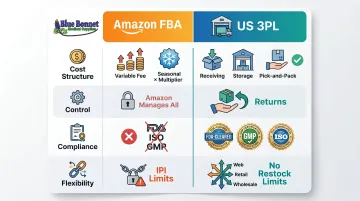
Amazon FBA vs US 3PL: Quick Comparison
Cost
Amazon FBA uses a per-unit fee model with several overlapping charges:
- Fulfillment fees: $3.02–$6.26+ per unit
- Monthly storage: $0.78/cu ft (Jan–Sep), $2.40/cu ft (Oct–Dec)
- Aged inventory surcharges: kick in at 181+ days
- Inbound placement fees: $0.21–$0.68/unit
- Fuel surcharge: 3.5% added to all FBA fees starting April 17, 2026
For Indian sellers calculating margins in rupees, these dollar-denominated costs are harder to predict given INR volatility against the USD.
A 3PL typically charges flat receiving fees ($5-$15/pallet), monthly pallet storage ($20-$40 standard, $30-$60 temperature-controlled), and pick-and-pack fees ($2-$3 first item, $0.30-$0.75 additional items). These rates are negotiable and avoid seasonal multipliers.
Control
- FBA: Zero control over packaging, product handling, or returns processing; everything follows Amazon's generic automated system
- 3PL: Full control over storage conditions, packaging design, labeling standards, and returns evaluation
Compliance
FBA warehouses are general-purpose facilities with no FDA registration, no ISO 13485 certification, and no climate-controlled medical-grade storage. A specialized US 3PL can provide FDA-cleared packaging, GMP-compliant storage, and ISO-certified handling — capabilities that matter significantly for medical product sellers.
Flexibility
FBA ties inventory to Amazon's ecosystem and imposes IPI-based restock limits—problematic when Indian sellers face 4-6 week international replenishment cycles. 3PLs impose no such limits and support multi-channel selling (Amazon, Shopify, Walmart, DTC websites) from a single inventory pool.
| Dimension | Amazon FBA | US 3PL |
|---|---|---|
| Cost structure | Per-unit fees + seasonal storage multipliers | Flat receiving, storage, and pick-and-pack rates |
| Control | None — Amazon manages all handling | Full control over packaging, storage, and returns |
| Compliance | No FDA/ISO/GMP capabilities | FDA-cleared, GMP-compliant, ISO-certified options available |
| Flexibility | Locked to Amazon; IPI restock limits apply | Multi-channel; no restock limits |
What Are Your Fulfillment Options as an Indian Seller?
What is Amazon FBA?
Amazon FBA (Fulfillment by Amazon) allows Indian sellers to ship inventory to Amazon's US fulfillment centers. Amazon then handles storage, picking, packing, shipping to customers, returns, and customer service. Products automatically become Prime-eligible, which can meaningfully improve conversion rates.
Key fee components for Indian sellers:
| Size Tier | Weight Range | 2025 Fee (Per Unit) |
|---|---|---|
| Small Standard | 0-4 oz | $3.02 |
| Large Standard | 1.5-2 lb | $5.56 |
| Large Standard | 2-3 lb | $6.26 |
| Large Bulky | 0-50 lb | $9.66 + $0.38/lb above 1 lb |
Monthly storage fees triple during Q4: $0.78/cu ft (Jan-Sep) jumps to $2.40/cu ft (Oct-Dec). Long-term storage fees kick in after 181 days, reaching up to $6.90/cu ft/month for very old inventory.
FBA pain points for Indian sellers:
- Restock limits: Amazon's Inventory Performance Index (IPI) score caps how much inventory you can hold. Scores below 400 trigger storage restrictions, which is damaging when your replenishment cycle from India takes 4-6 weeks
- No regulatory handling: FBA warehouses provide no specialized handling for medical devices or regulated products
- Zero branding flexibility: Once inventory reaches Amazon's warehouse, you have no control over packaging, inserts, or customer experience
What is a US 3PL Warehouse?
A 3PL (third-party logistics) warehouse stores your inventory and fulfills orders on your behalf. Indian sellers ship a bulk consignment to the 3PL's US facility, which then handles storage, order fulfillment across multiple platforms, returns processing, and shipping to US customers.
Typical 3PL cost structure:
- Receiving fee: $5-$15 per pallet
- Container unloading: $250-$500 per 40-ft container
- Monthly storage: $20-$40/pallet (standard), $30-$60/pallet (temperature-controlled)
- Pick-and-pack: $2-$3 first item, $0.30-$0.75 additional items
- Returns processing: $3-$5 + $2-$4 restock fee
These fees are negotiable and don't include seasonal surcharges or restock penalties. That cost flexibility matters, but for Indian sellers in the medical space, the bigger differentiator is compliance.
Why 3PLs Suit Indian Medical Product Sellers
Specialized 3PLs like Bluebonnet Medical Supplies provide infrastructure Amazon FBA simply doesn't offer:
- FDA-compliant storage and handling for medical devices
- GMP-aligned processes that satisfy regulatory requirements
- ISO-certified operations for quality-controlled fulfillment
Selling regulated health products through FBA without these controls puts your import clearance and product approvals at risk. A compliant 3PL removes that exposure.
Key Differences That Matter Most for Indian Sellers
Cross-Border Inventory Risk
When an Indian seller ships to FBA, Amazon can reject or quarantine non-compliant shipments. Common rejection triggers include:
- Unscannable or missing barcodes
- Incorrect prep for item category
- Packaging violations (boxes exceeding 25 inches or 50 lbs)
- Expiration dates within 90 days of arrival
The cost of returning rejected goods internationally is prohibitive—typically $3–$8 per unit. Amazon may also apply unplanned service fees of $0.20–$1.00+ per unit to correct issues in-house.
A 3PL with regulatory expertise inspects and preps inventory before it enters the fulfillment chain, catching compliance issues before Amazon ever sees the shipment.
Restock Limits vs. Lead Time Mismatch
Amazon's IPI scoring system restricts inventory levels based on your historical sell-through and excess inventory. Sellers scoring below 400 at quarterly checkpoints face capacity restrictions for the following quarter.
That constraint hits Indian sellers especially hard. For shipments arriving via ocean freight (30–45 days) or economy air (7–12 days), running out of stock due to FBA caps means:
- Lost Buy Box eligibility
- Ranking drops
- Sales momentum collapse
A 3PL eliminates this constraint entirely—you control how much inventory to hold based on demand forecasts, not Amazon's algorithm.
Regulatory Compliance for Medical Products
Amazon FBA warehouses are not FDA-registered, not ISO 13485-certified, and not climate-controlled to medical specifications.
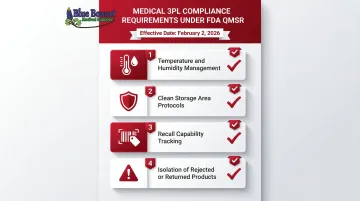
Under the FDA's Quality Management System Regulation (QMSR), effective February 2, 2026, sellers are legally responsible for ensuring their fulfillment partner meets ISO 13485:2016 requirements, including:
- Environmental controls (temperature, humidity, light)
- Contamination control in storage areas
- Lot-level traceability for recall capability
- Quarantine systems for rejected or returned products
FBA provides none of this. A specialized medical 3PL like Bluebonnet Medical Supplies builds these controls into standard operations — FDA clearance, ISO compliance, and GMP-aligned handling are part of every client engagement, not optional upgrades.
Multi-Channel Selling Capability
Indian sellers are actively moving to diversify beyond Amazon to Shopify, Walmart, or their own DTC websites.
FBA ties inventory to Amazon's ecosystem. Multi-Channel Fulfillment (MCF) is available but charges a steep premium:
| Size Tier | FBA Fee | MCF Fee (3-Day) | MCF Premium |
|---|---|---|---|
| Small Standard (4 oz) | ~$3.06 | $7.34 | 140% |
| Large Standard (12–16 oz) | ~$4.55 | $8.93 | 96% |
A 3PL serves all channels from a single inventory pool at the same fulfillment rate, giving Indian sellers the freedom to build a multi-channel US presence without cost penalties.
Hidden Cost Exposure in USD
FBA's fee structure includes multiple layers that catch Indian sellers off guard:
- Inbound placement fees ($0.21–$0.68/unit for single-location shipments)
- Low-inventory-level fees ($0.32–$0.97/unit when supply drops below 28 days)
- Returns processing fees ($1.78–$5.00+)
- 3.5% fuel surcharge (effective April 17, 2026)
These costs compound when margins are already thinned by international shipping and currency conversion. With the rupee depreciating approximately 3% annually against the dollar, a 3% cost increase can turn profitable SKUs into loss-makers.
A 3PL with direct carrier relationships — and no algorithm-driven fee surprises — gives Indian sellers a predictable cost structure they can actually build margins around.
Amazon FBA vs 3PL: Which is Better for Indian Sellers?
Choose Amazon FBA if:
- You sell lightweight, fast-moving, non-regulated consumer products exclusively on Amazon
- Your annual revenue is under $250K
- You have fewer than 10 SKUs
- You prioritize hands-off logistics over cost control
- Your products don't require specialized storage or handling
FBA's Prime badge delivers significant conversion rate lifts—often 20-30% higher than non-Prime listings—making it ideal for new market entrants testing demand.
Choose a US 3PL if:
- You sell medical devices, health products, or any regulated category requiring FDA-compliant handling
- You sell (or plan to sell) across multiple channels
- Your products are bulky, slow-moving, or require custom packaging
- You want full control over your US-facing brand experience
- Your monthly order volume exceeds 500 units
For Indian sellers without a US physical presence, a reliable 3PL partner essentially becomes your US operations arm.
Regulatory Compliance for Medical Product Exporters
For Indian companies exporting medical supplies or devices to the US, Amazon FBA's generic warehouse environment creates real regulatory risk. Incorrect storage conditions, lack of HIPAA-safe handling, or improper labeling can result in compliance violations.
A specialized 3PL like Bluebonnet Medical Supplies provides:
- FDA-cleared packaging services
- GMP-compliant storage and handling
- ISO certification for medical device quality management
- Lot-level traceability
- Temperature-controlled environments
This infrastructure addresses the key regulatory risks at every stage and ensures products don't get stuck at customs or face FDA enforcement.
The Scalability Consideration
As an Indian seller grows beyond $500K in US revenue, FBA's fee structure and platform dependency become increasingly costly.
Industry estimates consistently show FBA is cost-effective below roughly 500 orders/month. At 1,000+ units/month, 3PLs begin to pull ahead. At 3,000 units/month, the gap is significant:
- FBA: $17,250/month
- 3PL: $10,500/month
- Savings: $6,750/month
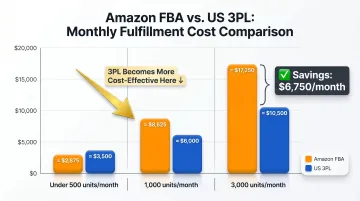
At this stage, transitioning to a 3PL or a hybrid model (FBA for top-selling Amazon SKUs + 3PL for everything else) is typically the more profitable path.
What "No US Presence" Actually Means for Your Operations
Indian sellers cannot physically inspect how their inventory is stored, handled, or shipped. This makes the choice of fulfillment partner a trust and compliance decision, not just a cost decision.
A 3PL with transparent pricing, regular inventory reports, and dedicated account support provides the operational visibility that FBA's opaque, automated system simply cannot match. For medical product sellers in particular, that visibility isn't optional—it's the difference between a smooth customs clearance and an FDA enforcement action.
Real-World Scenario: An Indian Medical Product Seller's Choice
Consider an Indian medical device manufacturer preparing to enter the US Amazon market with a catalog of 15 SKUs—pulse oximeters, blood pressure monitors, and mobility aids. Annual projected revenue: $400K.
The FBA Challenge
If this seller chooses FBA, they face several immediate obstacles:
- Compliance uncertainty: FBA warehouses lack FDA registration and ISO 13485 certification. The seller must trust that Amazon's generic ambient-temperature storage meets their devices' requirements, with no third-party documentation to verify conditions.
- Inbound rejection risk: A single labeling error or packaging violation can trigger rejection of an entire 40-ft container. Return shipping back to India runs $4,000–$8,000, plus 6–8 weeks of lost sales time.
- Storage surcharges: Slower-moving SKUs (mobility aids) held beyond 181 days incur aged inventory surcharges. During Q4, storage fees triple from $0.78 to $2.40/cu ft—severely impacting margin on seasonal products.
- Operational blind spot: With no US presence, the seller has no way to verify storage conditions, inspect returned units, or control how damaged products are handled.
The 3PL Solution
A US-based medical 3PL addresses each of these challenges directly:
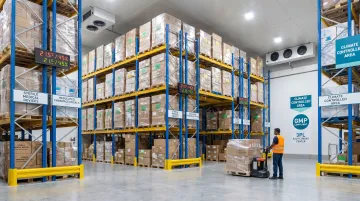
- Temperature-controlled storage with lot-level traceability: The 3PL provides FDA-compliant packaging services and documented storage conditions that support QMSR requirements
- Predictable costs: Flat monthly storage rates ($30-$40/pallet) with no seasonal multipliers or surprise fees
- Multi-channel flexibility: The seller can fulfill Amazon orders, Shopify DTC sales, and B2B wholesale orders from the same inventory pool
- Returns processing with product restoration: Returned units are inspected, tested, and restored to sellable condition when appropriate—recovering value that FBA's automated process would discard
This scenario plays out across categories—from diagnostics to mobility aids—where regulatory documentation and inventory control are non-negotiable. If your business falls into that profile, Bluebonnet Medical Supplies offers 3PL fulfillment built specifically for medical products entering the US market. Reach their team at info@bbmstx.com or through their contact page.
Conclusion
The right choice depends on what you're selling and where you want to go:
- FBA works best for high-volume, fast-moving, Amazon-only sellers dealing in non-regulated consumer products
- A US 3PL is the better long-term fit for Indian sellers who need compliance assurance, multi-channel capability, or sell regulated products
For Indian medical product sellers in particular, the fulfillment decision is not just an operational choice but a compliance and risk management decision. Partnering with the right US 3PL ensures products reach customers safely, legally, and with the brand experience you intend.
Frequently Asked Questions
Can Indian sellers use Amazon FBA without a US business entity?
Yes. Indian sellers can use FBA as a foreign seller with an Amazon.com seller account by filing IRS Form W-8BEN (individuals) or W-8BEN-E (entities) to claim treaty benefits. You'll need a US-compatible payment method and must comply with all FBA inbound requirements and US customs regulations.
Is Amazon FBA or a US 3PL cheaper for Indian sellers?
Cost depends on product type, velocity, and volume. FBA is cost-effective for lightweight fast-movers at lower order volumes (roughly under 500/month as a general benchmark). 3PLs typically offer lower and more predictable total costs for bulky, slow-moving, or regulated products once all FBA surcharges are accounted for.
What happens when FBA rejects an inbound shipment from India?
Amazon can reject, quarantine, or dispose of shipments that don't meet FBA prep requirements — with disposal fees starting around $0.15–$0.30 per unit, plus return freight costs for anything sent back internationally. Working with a 3PL that preps and inspects inventory before sending it to FBA significantly reduces this risk.
Can a US 3PL help Indian sellers fulfill orders on platforms beyond Amazon?
Most US 3PLs support multi-channel fulfillment from a single inventory pool — including Shopify, Walmart, and direct-to-consumer websites — which FBA cannot do cost-effectively. That makes 3PLs a stronger fit for Indian sellers building a multi-channel US presence.
What compliance certifications should Indian medical product sellers look for in a US 3PL?
Look for FDA-cleared packaging services, GMP and ISO compliance, and HIPAA-safe handling capabilities. These certifications ensure medical products are stored, handled, and shipped in line with US regulatory requirements under the QMSR.
How do Indian sellers manage returns when using a US 3PL?
A US 3PL handles returns locally — inspecting, testing, restocking, or disposing of units on the seller's behalf. Unlike FBA's automated returns process, this gives sellers direct control over how returned medical or sensitive products are evaluated.